Sarcoidosis, small fiber neuropathy, autonomic dysfunction and erectile dysfunction
Overview of pathophysiology and a clinical example
Introduction
Sarcoidosis is a multisystem granulomatous disease of unknown cause that can affect almost any organ system. Although the lungs and lymph nodes are most commonly affected, a significant number of patients develop neurological manifestations, including involvement of the peripheral and autonomic nervous systems.
Neurosarcoidosis occurs in approximately 5–15% of patients, while subclinical neurological manifestations are estimated to be considerably more common. One of the most common manifestations of peripheral nervous system involvement is small fiber neuropathy (SFN).
SFN affects small sensory and autonomic nerve fibers involved in the regulation of pain, temperature and autonomic functions. Because the autonomic nervous system controls a range of vital functions, including cardiovascular regulation, gastrointestinal function and sexual function, damage to these fibers can lead to a broad range of symptoms.
Small fiber neuropathy in sarcoidosis
Small fiber neuropathy results from damage to:
• unmyelinated C fibers
• thinly myelinated Aδ fibers
These fibers are a key part of the autonomic nervous system and the peripheral nociceptive system.
SFN is a relatively common complication in people with sarcoidosis. Studies show that SFN symptoms may occur in 40–86% of people with sarcoidosis, although objective confirmation by skin biopsy is less common.
The pathophysiological mechanism includes:
• chronic granulomatous inflammation
• immune activation of macrophages and lymphocytes
• cytokine neurotoxicity
• damage to autonomic ganglia and peripheral nerve fibers.
The result is progressive autonomic dysfunction and neuropathic symptoms.
Autonomic dysfunction in SFN
The autonomic nervous system regulates many vital functions:
• blood pressure
• heart rhythm
• the digestive system
• sweating
• regulation of blood vessels
• sexual function.
People with SFN often develop dysautonomia, which may include:
• orthostatic hypotension
• tachycardia
• vasovagal syncope
• gastrointestinal disorders
• thermoregulation disorders
• sexual dysfunction.
These symptoms result from impaired signal transmission in the autonomic nerve fibers that regulate vascular tone and the body’s reflex mechanisms.
Neurophysiology of erection
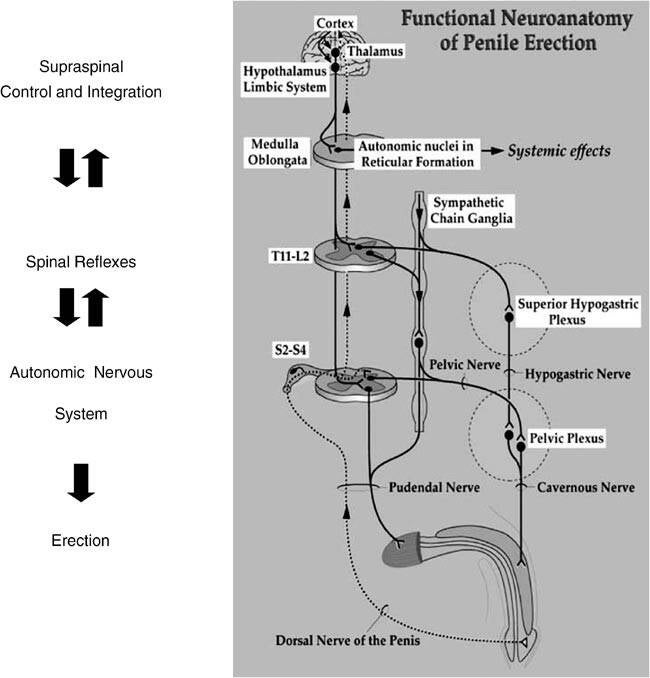
Erection is a complex neurovascular reflex involving coordination of the autonomic and somatic nervous systems.
Parasympathetic nerves (S2–S4) cause:
• vasodilation of the penile arteries
• relaxation of the smooth muscle of the corpora cavernosa
• increased blood inflow.
The sympathetic nervous system (T11–L2) is involved in:
• regulation of vascular tone
• the ejaculatory reflex.
A stable erection also requires a functional veno-occlusive mechanism that keeps blood in the corpora cavernosa.
Autonomic neuropathy disrupts these mechanisms, which may result in:
• a weaker erection
• a shorter duration of erection
• difficulty achieving orgasm
• reduced genital sensation.
Sexual dysfunction in sarcoidosis
Studies show that sexual dysfunction is significantly more common in patients with sarcoidosis than in the general population.
In one clinical study:
• approximately 39% of men with sarcoidosis had erectile dysfunction
• more than 70% reported reduced sexual satisfaction.
The causes of sexual dysfunction in sarcoidosis are multifactorial and include:
• chronic inflammation
• autonomic neuropathy
• fatigue
• depressive symptoms
• effects of medication.
However, the neurogenic component of erectile dysfunction plays a significant role in people with SFN.
Clinical example
Sarcoidosis, autonomic neuropathy and vasovagal syncope
People with long-standing systemic sarcoidosis may develop a combination of symptoms of autonomic dysfunction and small fiber neuropathy.
In a typical clinical scenario, the following are present:
• chronic sarcoidosis with a long-standing inflammatory process
• symptoms of autonomic dysfunction
• episodes of vasovagal syncope confirmed by a tilt-table test
• conduction disturbances in somatosensory pathways (SSEP)
• normal electroneuromyography (EMNG) of the large nerve fibers.
This combination of findings suggests small fiber neuropathy with autonomic involvement.
In the clinical picture, patients may develop:
• absence of morning erections
• a weaker maximum erection
• a shorter duration of erection
• difficulty achieving orgasm
• a need for more intense stimulation.
Other symptoms of autonomic dysfunction may occur at the same time, such as:
• tachycardia
• orthostatic instability
• vasovagal syncope
• reduced tolerance of physical exertion.
This combination of symptoms reflects impaired autonomic regulation of blood vessels and reflexes.
Chronic neuropathy and prognosis
In long-standing sarcoidosis, the inflammatory process can lead to a permanent loss of small nerve fibers. This can be demonstrated by reduced intraepidermal nerve fiber density on skin biopsy.
When neuropathy has been present for many years or decades, nerve fiber damage may become structural and partly irreversible.
In such cases, autonomic dysfunction and sexual dysfunction often become chronic manifestations of the disease.
Conclusion
Small fiber neuropathy is one of the most common neurological complications of sarcoidosis and is often associated with autonomic dysfunction. Because the autonomic nervous system regulates the vascular mechanisms of erection, damage to these nerve fibers can lead to neurogenic erectile dysfunction.
In people with long-standing sarcoidosis and autonomic neuropathy, erectile dysfunction may be part of a broader clinical picture of dysautonomia, which also includes cardiovascular disorders such as vasovagal syncope.
This clinical presentation reflects the complex interaction between chronic inflammation, autonomic nerve damage and the neurovascular regulation of sexual function.
References
Moor CC et al. Sexual Dysfunction in Patients With Sarcoidosis. CHEST. 2024.
Raasing LRM et al. Small Fiber Neuropathy in Sarcoidosis. Brain Communications. 2024.
Hoitsma E et al. Pain and autonomic dysfunction in patients with sarcoidosis and small fiber neuropathy. Journal of Neurology.
Dansereau B, Wang L. Neuromuscular Sarcoidosis: Peripheral Nervous System Manifestations. Practical Neurology.
Drent M et al. Challenges of Sarcoidosis and Its Management. New England Journal of Medicine.