Sarcoidosis affecting the joints, muscles and bones
Sarcoidosis can affect many parts of the body, including the joints, muscles and bones. Approximately one in five people with sarcoidosis experiences musculoskeletal symptoms. This page provides information about symptoms, investigations and treatment when sarcoidosis affects the joints, muscles or bones.
Bones
Sarcoidosis can affect bones in two ways: directly through inflammation in the bone, and indirectly through treatments used to control sarcoidosis symptoms.
Symptoms
Most people with bone involvement do not feel any symptoms. Bone changes caused by sarcoidosis are usually found on imaging scans. Your doctor may arrange further tests because similar changes can also be caused by other conditions, and it is important to establish whether sarcoidosis is responsible.
Treatment may not need to change when the bones are affected, especially if there are no symptoms. Sometimes, however, your doctor may recommend immune-modifying medicines similar to those used for joint or muscle disease.
Treatment side effects
People with sarcoidosis are often treated with corticosteroids such as prednisone. Long-term corticosteroid treatment can contribute to bone thinning (osteoporosis). Thin bones may cause no symptoms but are weaker, more fragile and more likely to fracture.
Investigations
People receiving long-term steroid treatment may be assessed for osteoporosis with a bone-density scan (DEXA scan). This measures bone strength and can help guide treatment. Your doctor may also measure calcium and vitamin D levels. Sarcoidosis can affect these levels, which are important for healthy bones.
Treatment
Several treatments can strengthen bones and help prevent fractures. A commonly prescribed medicine is weekly alendronic acid, sometimes combined with calcium and/or vitamin D supplements.
Because people with sarcoidosis may have high calcium levels, calcium and vitamin D should be checked before taking supplements. Levels should then be monitored regularly with blood tests. Ask your doctor or a specialist sarcoidosis service for individual advice.
Advice for healthy bones
• Stay physically active.
• Get enough calcium from foods such as dairy products, fruit and vegetables.
• Maintain an appropriate vitamin D level, with safe sunlight exposure when suitable.
Joints
Chronic joint pain affects fewer than 1% of all people with sarcoidosis. Tell your doctor about joint symptoms because changes in treatment or physiotherapy may help.
Symptoms
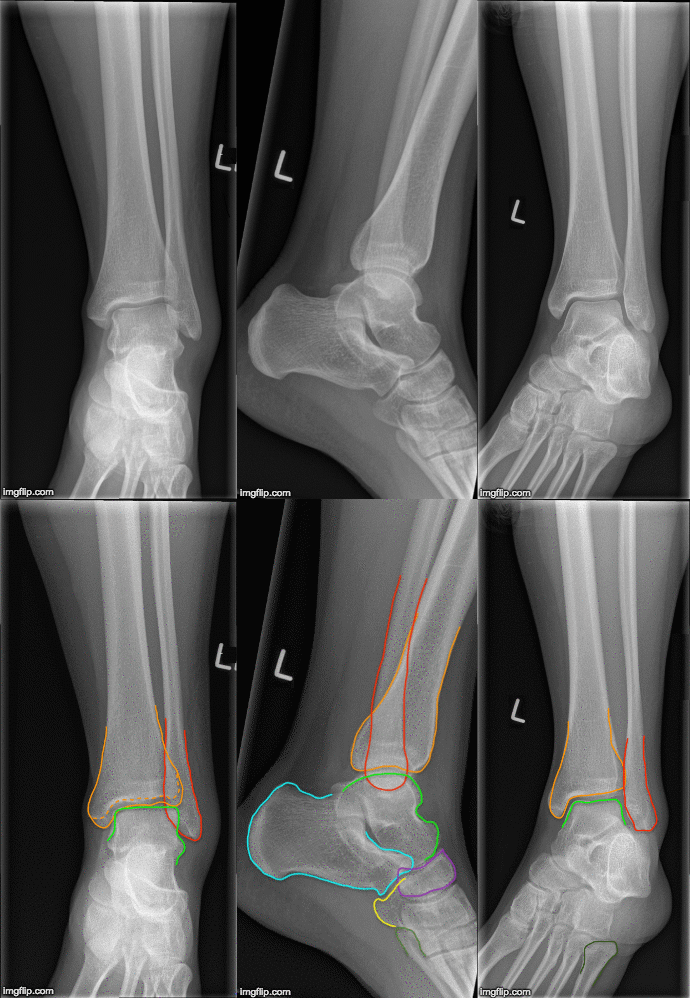
Any joint can be affected, but the feet, ankles and knees are most commonly involved. Symptoms may include pain, stiffness and swelling, sometimes with redness.
Investigations
Joint pain is diagnosed after a medical consultation. Further tests may sometimes be needed, including joint X-rays or other imaging such as ultrasound or MRI. Your doctor may take a sample of fluid from a swollen joint with a needle and syringe for analysis.
Treatment
Treatments that may reduce joint symptoms include non-steroidal anti-inflammatory drugs (NSAIDs), corticosteroids such as prednisone, or other immune-modifying medicines such as methotrexate.
Advice
Inflamed joints can be painful and restrict daily movement. Try to move and exercise regularly, as exercise may reduce stiffness around the joints. If exercise causes moderate or severe joint pain, stop and seek medical advice.
Löfgren syndrome
Some people develop sudden joint pain and swelling, most often in the ankles, together with painful red or purple lumps on the lower legs. These skin changes are called erythema nodosum. When these symptoms occur together, a doctor may arrange a chest X-ray to look for enlarged lymph nodes in the chest.
These lymph nodes usually do not cause symptoms. The combination of joint symptoms, erythema nodosum and enlarged chest lymph nodes on an X-ray is called Löfgren syndrome. It is a seasonal condition that most often appears in spring and autumn, when temperatures change.
Löfgren syndrome often resolves on its own without specific medication. NSAIDs or corticosteroids such as prednisone may sometimes be used for a short time to relieve symptoms.
Muscles
Muscle involvement in sarcoidosis is relatively uncommon. Some people develop painful lumps in the muscles. In other cases, muscle involvement is less specific and may cause a feeling of muscle weakness. Tell your doctor if these symptoms develop.
Investigations
Assessment may include muscle imaging (MRI or CT/PET), electrical muscle tests, or a muscle biopsy. Muscle biopsy is generally a straightforward procedure and can be performed under local anaesthesia.
Treatment
When sarcoidosis affects the muscles, treatment commonly combines corticosteroids such as prednisone with another immune-modifying medicine, for example azathioprine or methotrexate.
This information is educational and does not replace an examination or individual advice from a qualified healthcare professional.