

My 20-year journey to a sarcoidosis diagnosis

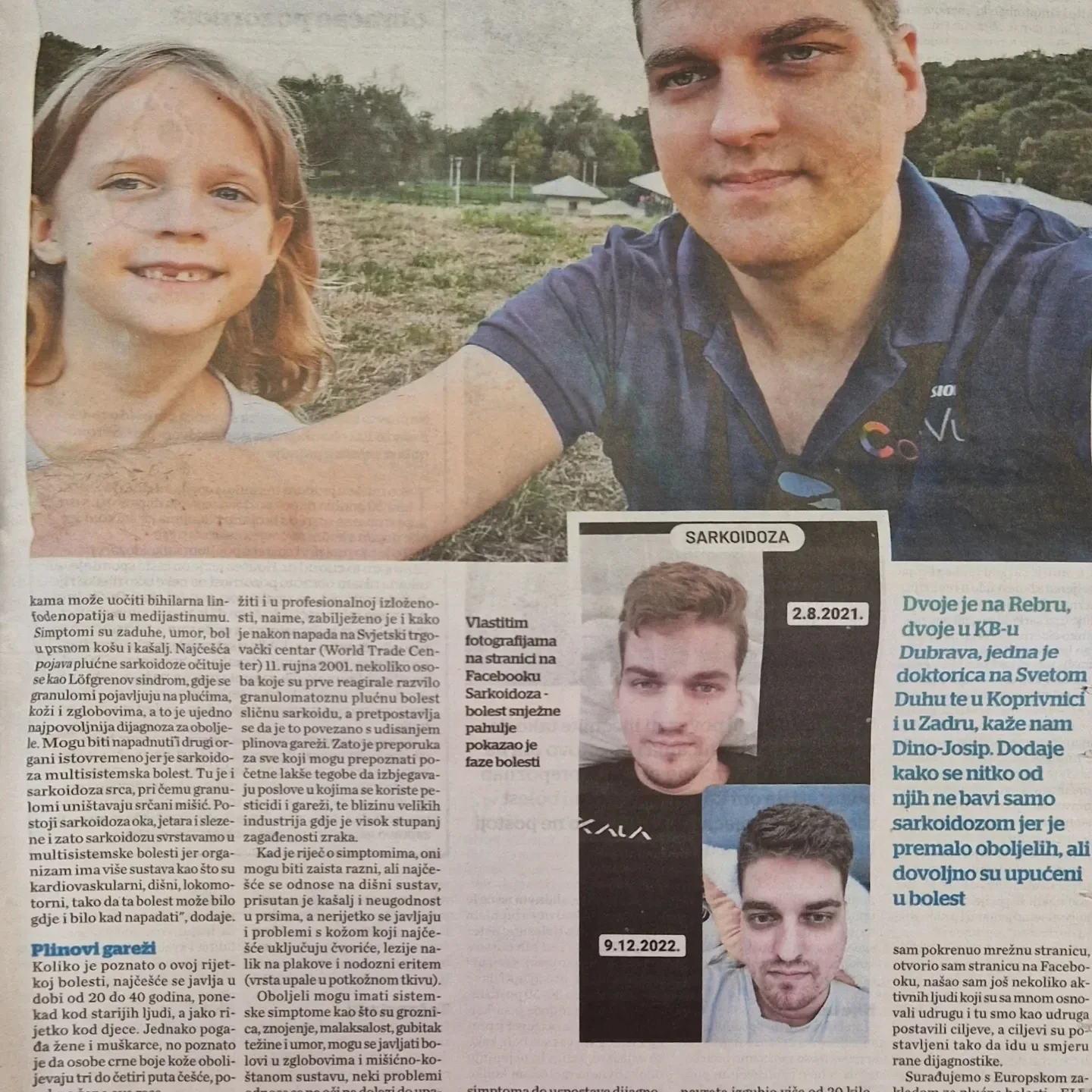
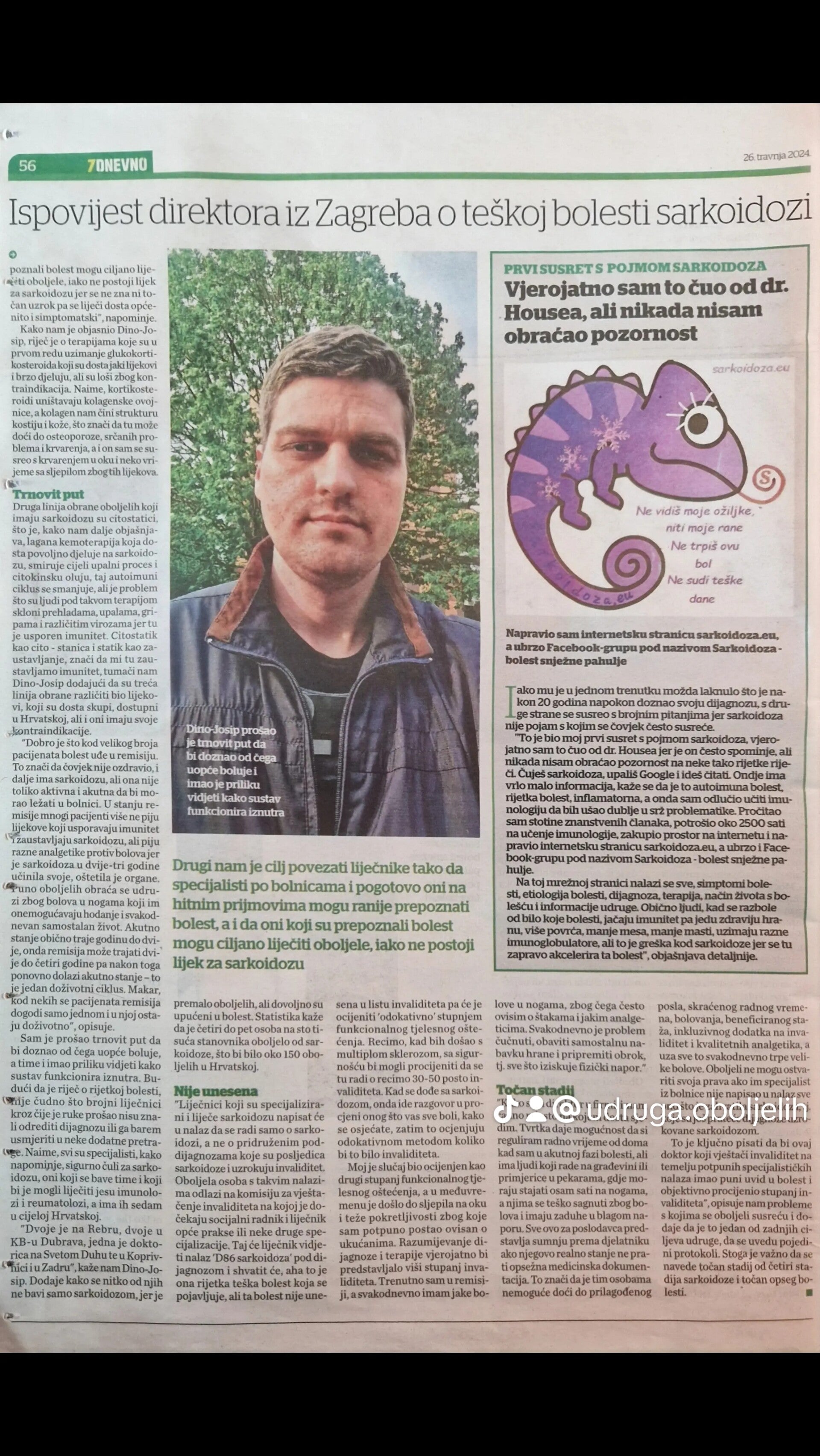
Interview about sarcoidosis published in 7 Dnevno, 24 April 2024
MY 20-YEAR JOURNEY TO A DIAGNOSIS
It is difficult to learn that you have a disease about which even doctors know little. It is even harder when years of visits to hospitals and specialists are needed before the cause is found. Symptoms and pain are present, but there are no answers. Dino-Josip Ključarić from Zagreb experienced this himself: it took twenty years before he received a diagnosis of sarcoidosis.
His symptoms began during his student years. At the age of 18 or 19 he sometimes limped because of pain in his ankles and knees, and he experienced night sweats. In his thirties he developed breathlessness and sharp chest pain resembling a heart attack. Emergency examinations repeatedly failed to show the cause. In 2009 he survived sepsis of unknown origin.
The diagnosis was finally reached after erythema nodosum, swollen ankles and severe breathing difficulties led to hospitalisation. Doctors performed CT, bronchoscopy, lung and muscle biopsies, EBUS, skin and bone-marrow biopsies, colonoscopy, gastroscopy and neurological and eye examinations. The findings confirmed acute sarcoidosis.
After diagnosis, Dino-Josip studied immunology and read hundreds of scientific papers. He created sarkoidoza.eu and founded the Association of patients with sarcoidosis to improve awareness, support patients and promote earlier diagnosis. Sarcoidosis is a multisystem inflammatory disease that can affect the lungs, skin, joints, heart, eyes, liver, spleen and nervous system. Granulomas can interfere with the normal function of affected organs.
The most common pulmonary symptoms are breathlessness, cough, chest discomfort and fatigue. Other symptoms may include fever, night sweats, weakness, weight loss, joint and muscle pain, skin lesions, eye inflammation and visual problems. Löfgren syndrome, involving the lungs, skin and joints, often has a more favourable course, but sarcoidosis may also affect the heart and other organs.
Treatment may include corticosteroids, cytostatic or immunomodulating medicines and biological therapies. These treatments can reduce inflammation but may also have important side effects. Some patients enter remission, meaning that the disease becomes less active, although it does not disappear and lasting organ damage or pain may remain.
Dino-Josip emphasises that patients need complete specialist documentation listing every organ affected and every associated diagnosis. Without this information, disability assessments may underestimate the real impact of sarcoidosis. The Association therefore works for better medical education, earlier recognition, complete assessments, patient support and appropriate social rights.
Source: https://www.zagreb.info/magazin/ispovijest-zagrepcanina-koji-je-jedva-otkrio-tesku-bolest-nocno-znojenje-je-cest-simptom-kao-i-bolovi-u-nogama/626606/