Löfgren syndrome: an acute presentation within the sarcoidosis spectrum
Adam J. Brown, MD
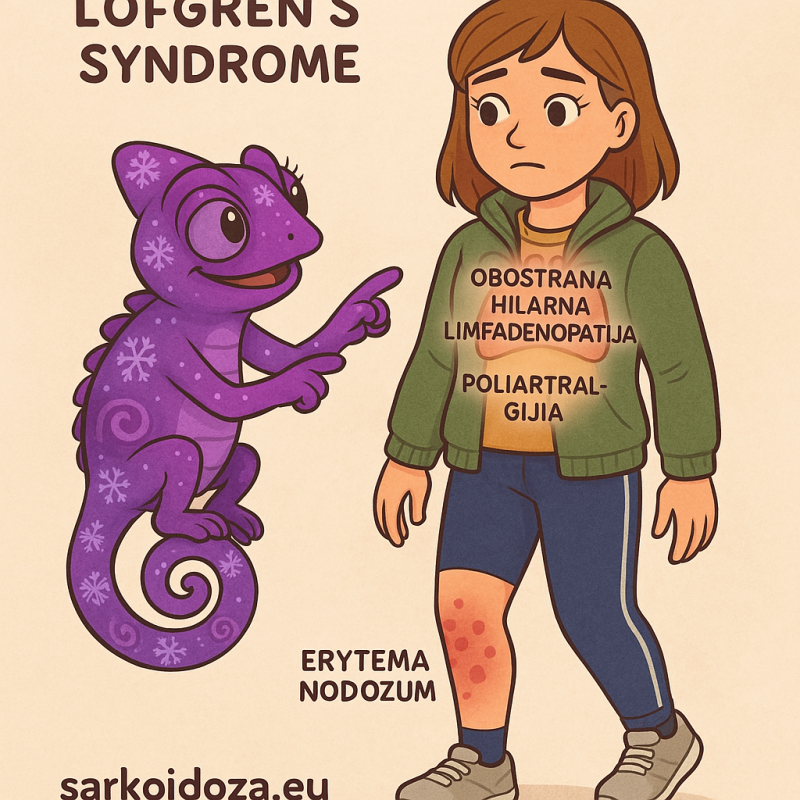
Löfgren syndrome is the acute “black sheep” of the sarcoidosis family. Unlike the subtle onset and gradual progression of other forms, it often presents abruptly. It is usually recognised by a characteristic triad—erythema nodosum, bilateral hilar lymphadenopathy and polyarthralgia—but it remains a diagnosis of exclusion and can be confused with rheumatological or infectious diseases.
A clinical example described by rheumatologist Adam J. Brown involved a 57-year-old woman with subacute inflammatory arthritis and a mild erythematous forearm lesion. Tests for antinuclear antibodies and cyclic citrullinated peptide were negative. The diagnosis was Löfgren syndrome based on the typical triad. The syndrome is considered an acute sarcoidosis attack, but it behaves differently from many other forms because it is usually self-limited.
Historical description
Swedish clinician Sven Halvar Löfgren first described the condition in 1946 with Holger Lundbeck, after reviewing 178 cases of erythema nodosum. In their early work, painful joints and joint swelling were frequent. Later reports helped distinguish the condition from tuberculosis and described the combination of bilateral hilar lymphadenopathy, erythema nodosum and mild inflammatory arthritis. Joint symptoms often improve within weeks or months.
Specific populations and outcomes
Löfgren syndrome has been reported particularly often in Scandinavia and Spain. A Barcelona group followed 113 patients between 1974 and 1996 for an average of 58 months and defined the syndrome as erythema nodosum, peri-articular ankle inflammation and bilateral hilar adenopathy. Most patients retained ankle movement despite the inflammation. Arthralgia in joints other than the ankles occurred in about two thirds of patients, and uveitis was seen in a small number.
Only 6% of the Barcelona patients had a recurrence between two and twenty years. The low recurrence rate and the typical triad are important clinical clues, but every patient still needs an individual assessment. Cases vary seasonally: around 70% in the reported series occurred between March and July, suggesting that environmental factors may contribute.
This information is educational and does not replace a medical examination or medical advice.
Adapted from Rob Volansky. Source: https://www.healio.com/news/rheumatology/20200131/a-lfty-diagnosis-amid-shades-of-sarcoidosis