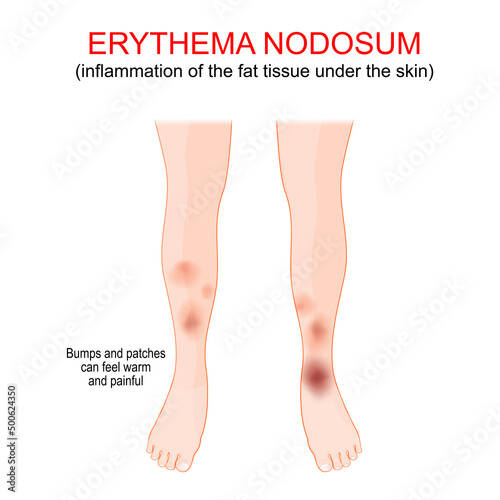
Erythema nodosum
One of the three characteristic features of sarcoidosis and Löfgren syndrome.
Erythema nodosum (EN) is a form of panniculitis characterised by painful, red or purple, palpable nodules under the skin, usually on the lower legs and sometimes elsewhere. It often occurs together with a systemic disease, particularly streptococcal infection, sarcoidosis or tuberculosis.
EN most often affects people in their twenties and thirties, but it can occur at any age and is more common in women. The cause is not fully known; an immune reaction is suspected because EN is frequently associated with other diseases.
Common triggers include streptococcal infection, especially in children, sarcoidosis and tuberculosis. Other possible triggers include bacterial infections such as Yersinia, Salmonella, Mycoplasma, Chlamydia, leprosy and lymphogranuloma venereum; fungal infections such as coccidioidomycosis, blastomycosis and histoplasmosis; viral infections such as Epstein–Barr virus and hepatitis B; medicines including sulfonamides, iodides, bromides and oral contraceptives; inflammatory bowel disease; blood cancers and solid tumours; and pregnancy. Up to one third of cases are idiopathic, meaning no cause is found.
Symptoms and diagnosis
EN appears as painful red plaques or nodules and may be accompanied by fever, malaise and joint pain. The differential diagnosis includes other forms of panniculitis and vasculitis.
Diagnosis is based mainly on the clinical appearance, but EN should prompt assessment for an underlying cause. Depending on the situation, investigations may include a biopsy, skin testing such as PPD or anergy testing, antinuclear antibodies, a full blood count, a chest X-ray, an antistreptolysin-O titre or a throat swab and culture. The erythrocyte sedimentation rate is often raised.
Treatment
Erythema nodosum almost always resolves spontaneously. Supportive treatment may include rest, elevating the affected limb, cool compresses and non-steroidal anti-inflammatory drugs (NSAIDs). Other treatments, including potassium iodide or systemic corticosteroids, must be prescribed and monitored by a doctor because they may have important risks and corticosteroids can worsen an unrecognised infection. If an underlying cause is found, that cause should be treated.
Source: https://www.msd-prirucnici.placebo.hr/msd-prirucnik/dermatologija/preosjetljivost-i-upalne-reakcije/erythema-nodosum
This page is educational and does not replace examination or individual medical advice.